
Identifying High Quality Aftermarket Motorcycle Parts
Quick Summary
High-quality aftermarket motorcycle parts match factory specifications for fit, material strength, and finish, and the manufacturer can prove it. Check the named material grade, published dimensions, and written warranty terms before buying. Safety-critical components like brake lines and steering parts deserve the strictest scrutiny.
- Look for a named alloy or steel grade, not vague claims like premium quality.
- Confirm fitment against your VIN and the OEM part number, since mid-year changes matter.
- Use OEM or verified manufacturers for brake, steering, and frame components.
- Compare total cost of ownership, including installation, expected lifespan, and failure cost.
- Verify the seller and packaging; markings and prices far below market often signal counterfeits.
Table of Contents
- What Makes an Aftermarket Motorcycle Part High Quality
- OEM vs Aftermarket Motorcycle Parts: Comparing Standards and Tradeoffs
- Materials, Manufacturing Quality, and Pros and Cons by Material Grade
- Motorcycle Parts Compatibility and Fitment: Verifying Beyond Make, Model, and Year
- How to Spot Counterfeit Motorcycle Parts: A Step-by-Step Verification Checklist
- Standards, Certifications, and Evidence to Look For
- Safety and Risk by Part Category
- Best Aftermarket Motorcycle Parts Brands and How to Evaluate Them
- Price Tiers, Warranty, Returns, and Long-Term Value
- Choosing Your Next Part at NE Cycle Shop
- Frequently Asked Questions
What Makes an Aftermarket Motorcycle Part High Quality
Last Updated: November 24, 2026
Aftermarket motorcycle parts are made by companies other than the original manufacturer, and their quality ranges from excellent to dangerous. A high-quality aftermarket part is one that matches the factory specification for fit, material strength, and finish, and that the manufacturer can prove it. Aftermarket motorcycle parts cover everything from brake lines and clutch plates to exhaust systems and suspension components, so the standard you apply should depend on what the part does to your bike's safety.
Start with three checks: the material specification, the manufacturing tolerances, and the warranty behind the part. A quality manufacturer names the alloy or steel grade, publishes dimensions, and backs the product with written terms. A vague listing that says "premium quality" without specifics is a warning sign.
Watch out: a part that looks identical in photos can still use cheaper metal, looser tolerances, or inferior heat treatment that only shows up under load.
Materials matter most for stressed components. Stainless steel braided brake lines, forged or billet components, and heat-treated clutch plates should specify their construction. Cosmetic parts such as covers or mirrors can be judged more on finish and fit.
Manufacturing consistency is the other half of the picture. Look for machined surfaces with clean finishes, consistent hole placement, and documentation of testing where it applies. Parts that arrive with burrs, misaligned mounting points, or uneven coatings usually reflect weak process control.
Finally, warranty terms tell you how confident the maker is. A clear return policy and a defined defect coverage period are a better signal than marketing claims. Keep your order records, since most claims require proof of purchase.
| Quality Indicator | What to Look For | Red Flag |
|---|---|---|
| Material spec | Named alloy or steel grade | "Premium" with no grade |
| Dimensions | Published fitment and tolerances | No measurements listed |
| Finish | Clean machining, even coating | Burrs, uneven plating |
| Warranty | Written terms and return window | Vague or missing policy |
OEM vs Aftermarket Motorcycle Parts: Comparing Standards and Tradeoffs
OEM parts come from the manufacturer that built your motorcycle, and they carry a known specification for every dimension and material. Aftermarket motorcycle parts come from third parties who may meet, exceed, or fall short of that baseline. The practical question is not which category is better in general, but which one serves the specific repair or upgrade you're making.
OEM parts give you predictability. Fitment is guaranteed because the part was designed for your exact model year, and the warranty typically runs through the dealer network. The tradeoff is price, and for older or discontinued models, OEM supply can be limited or slow.
Aftermarket parts often deliver a lower cost, faster availability, or performance gains the factory never offered. A rider upgrading brake components or exhaust might choose aftermarket for better stopping power or sound. The risk is inconsistency: two aftermarket brands can list the same part number while using very different materials.
For routine wear items like filters, spark plugs, and most gaskets, an OEM-equivalent aftermarket part is usually a sensible choice. For safety-critical items such as brake calipers, steering components, or frame-mounting hardware, most riders should stick with OEM or a manufacturer with a proven track record.
Think of the decision as a tradeoff, not a ranking. Lower cost can be worth it for cosmetic or non-critical parts. Spend more on the components where failure could injure you.
Materials, Manufacturing Quality, and Pros and Cons by Material Grade
Material choice determines how a part performs under heat, vibration, and load. Knowing the common grades helps you judge an aftermarket listing before you buy.
Stainless steel, typically 304 or 316 grade, resists corrosion well and suits brake lines, fasteners, and exhaust hardware. The downside is weight and cost compared with plain steel.
Chromoly steel offers high strength for its weight and is common in frame components and some axles. It needs proper heat treatment to perform as expected, so the manufacturer's process matters.
Aluminum, especially billet or forged 6061 or 7075 alloy, is light and machines cleanly, making it popular for levers, pegs, and sprockets. It is less fatigue-resistant than steel in some high-stress applications and can wear faster on chains.
Titanium is very strong and light but expensive, and it is mostly found in exhaust and fastener applications.
Pros and cons by grade:
- Stainless steel: corrosion resistance, good for lines and fasteners; heavier and costlier than carbon steel.
- Chromoly: high strength-to-weight ratio, reliable in structural parts; depends heavily on heat treatment.
- Aluminum: lightweight and easy to machine; can fatigue under heavy stress.
- Titanium: excellent strength and weight savings; high price and limited application.
Manufacturing quality is equally important. Look for machining marks that are even, coatings that are uniform, and welds that are clean. Mismatched finishes or visible porosity suggest shortcuts.
Motorcycle Parts Compatibility and Fitment: Verifying Beyond Make, Model, and Year
Matching make, model, and year is only the starting point. Many motorcycles had mid-year changes, regional variations, and trim differences that alter a part's fit. A part listed for a 2015 model may not fit a late-2015 unit with a revised component.
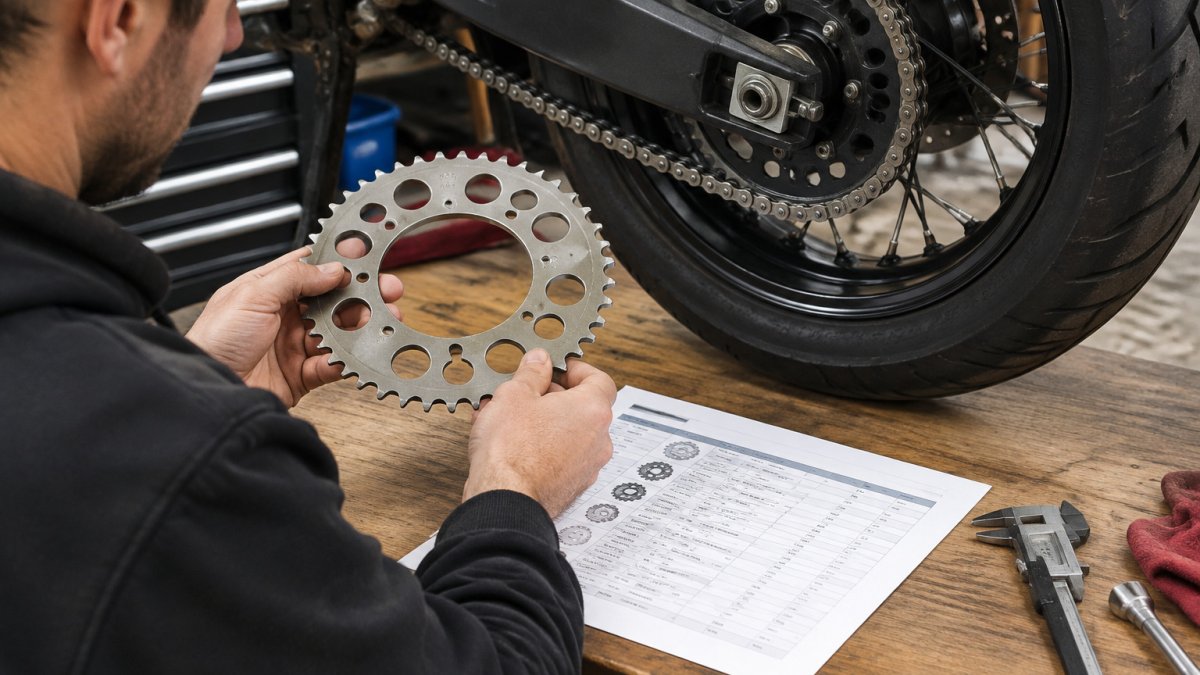
Start by finding your VIN and any engine or frame number, then confirm the exact configuration on the listing. Compare the OEM part number on your old component against the aftermarket listing's cross-reference. If you can, measure the critical dimensions: bolt spacing, bore diameter, length, and mounting thread size.
Check whether the listing includes fitment notes, such as "fits 2015 CBR600RR ABS only" or exclusions for specific trim levels. Vague wording like "fits most models" should prompt a closer look.
Before you order, compare the replacement with the part you're removing. Lay them side by side if you have both. Confirm connector types, sprocket tooth counts, chain pitch, and wheel spoke lengths, since small differences cause installation failures.
When in doubt, contact the seller with your VIN and the old part number and ask them to confirm fitment in writing. A reputable shop will answer clearly.
How to Spot Counterfeit Motorcycle Parts: A Step-by-Step Verification Checklist
Counterfeit parts are sometimes sold through marketplaces and social listings with misleading part numbers. The following steps help you verify a part before you install it.
- Check the seller's history. Look for a verifiable business address, consistent reviews over time, and a clear return policy. New sellers with few reviews and unusually low prices deserve caution.
- Compare the packaging. Authentic OEM and reputable aftermarket parts arrive in consistent boxes with legible printing, correct logos, and matching part numbers on the label.
- Inspect markings. Genuine parts usually have laser-etched or stamped part numbers, manufacturer codes, and clean lettering. Blurry, misspelled, or inconsistent markings are a red flag.
- Examine the finish. Counterfeit castings often show porosity, uneven plating, or rough edges. Compare the surface to a known-good part.
- Verify dimensions. Measure against the original component or published specs. Counterfeit parts frequently have off-spec threads or hole positions.
- Confirm the warranty. A legitimate manufacturer will state warranty terms plainly. If the seller avoids the question, walk away.
- Test the price. Prices far below every other seller for the same part often signal a fake.
If a part fails any of these checks, do not install it. Return it and report the listing to the marketplace.
Standards, Certifications, and Evidence to Look For
Many aftermarket motorcycle parts are not covered by a single federal performance standard. Brake pads, levers, sprockets, chains, and suspension springs are largely governed by the manufacturer's own claims. Where standards do exist, they are narrow, so it helps to know which ones apply before treating a marking as a guarantee.
Federal markings that actually mean something.
Evidence that carries more weight than logos.
- Published material specifications. A named alloy (for example, 6061-T6 or 7075-T6 aluminum, or 304 stainless) with a stated temper is verifiable. "Aircraft-grade aluminum" is not a specification.
- Dimensional drawings. A manufacturer willing to publish mounting dimensions, thread sizes, and torque specs is telling you it expects engineers to check its work.
- Test data on request. For brake lines, suspension springs, and steering components, ask whether the manufacturer has burst-pressure, fatigue, or salt-spray test results and whether it will share them. Many will; those that will not have told you something.
- Traceability. A part number stamped or laser-etched on the component itself, matching the packaging and the listing, supports a warranty claim and helps you spot counterfeits.
How to verify a claim in practice. Start with the manufacturer's own site, not the marketplace listing. Look for a downloadable spec sheet or installation guide. Cross-check the part number against the manufacturer's catalog. If the manufacturer has no site or the site has no product documentation, the certification claims on the listing are unverifiable and should be discounted accordingly.
Where independent testing helps. For safety-critical parts, third-party test reports and independent lab results are more persuasive than self-reported claims. Community forums and long-term owner reviews can surface failure patterns that a spec sheet will not, though a single review should not outweigh documented testing.
Watch out: a certification logo on a product page proves nothing until you confirm the certificate number against the issuing body's registry, because copied logos are one of the most common tricks on counterfeit listings.
Safety and Risk by Part Category
Risk varies widely across parts. A failed mirror is an inconvenience. A failed brake line or steering component can cause a crash.
- High risk: Brake lines, brake calipers, master cylinders, steering stem components, frame hardware, and wheel bearings. Use OEM or manufacturers with verified testing. Never compromise on these.
- Moderate risk: Clutch components, drive chains and sprockets, suspension internals, and engine gaskets. Quality matters for reliability and performance. Follow torque specs and replacement intervals.
- Lower risk: Covers, levers, grips, mirrors, and cosmetic accessories. Choose by appearance and fit, but still confirm mounting compatibility.
For every installation, follow the service manual's torque values, use correct thread locker where specified, and inspect after the first short ride. Safety-critical parts should be installed or checked by a qualified mechanic if you lack experience.
Watch out: a clutch plate or chain that meets the listed spec can still wear prematurely if the tension, alignment, or lubrication is wrong, so setup matters as much as the part itself.
Best Aftermarket Motorcycle Parts Brands and How to Evaluate Them
Brand reputation is a useful starting point, but evaluate each brand against the criteria above rather than relying on name recognition alone. A well-regarded brand may have weak products in some categories, and a lesser-known manufacturer may excel in one niche.
To evaluate a brand, check whether it publishes material specifications, dimensional data, and warranty terms. Look at how it handles customer service and returns. Read reviews that mention long-term durability rather than only first impressions. Compare pricing against other sellers of the same part number to spot outliers.
Build a shortlist of two or three brands for each part you need, then compare them on fit verification, material grade, warranty, and documented testing. This approach keeps the decision grounded in evidence instead of marketing.
Price Tiers, Warranty, Returns, and Long-Term Value
Sticker price is the least useful number on an aftermarket listing. The number that matters is total cost of ownership: purchase price plus shipping, installation labor, consumables, expected service life, and the cost of a premature failure. Most top-ranking guides stop at "budget, mid-range, premium" and never show riders how to do that math. Here is a framework you can apply to any part.
The three price tiers, defined by what you actually get.
- Budget tier. Often imported, sold under many brand names, and priced well below OEM. You typically get a part that fits and functions, but documentation is thin: no published material grade, no dimensional drawing, and a warranty measured in weeks rather than years. Acceptable for cosmetic covers, grips, and non-load-bearing brackets. Risky for anything that holds pressure, carries the rider's weight, or controls steering or braking.
- Mid-range tier. The sweet spot for most riders. Manufacturers in this tier usually publish material specs, offer a 1-year or limited lifetime warranty, and sell through established retailers with real return policies.
- Premium tier. Forged or billet construction, documented testing, and warranties that cover defects for multiple years. Prices can meet or exceed OEM. Justified for track use, heavy touring loads, and safety-critical components where the failure mode is a crash rather than a nuisance.
Build a total-cost estimate before you buy. For each candidate part, write down four numbers: (1) delivered price including shipping and tax; (2) installation cost, whether a shop hourly rate or your own time; (3) expected replacement interval based on the manufacturer's stated service life or the OEM interval; and (4) the cost of the most likely failure. A $40 chain with a 10,000-mile expected life costs more per mile than a $120 chain rated for 30,000 miles, and a failed chain can crack a crankcase. Do the division and the tier decision often makes itself.
Warranty terms worth reading closely. A warranty is only as good as its exclusions. Look for these specific clauses:
- Defect vs. wear coverage. Most warranties cover manufacturing defects but exclude normal wear. A clutch plate worn out at 8,000 miles is usually not a defect claim.
- Labor reimbursement. Most aftermarket warranties cover the part only, not the labor to replace it. Ask explicitly whether labor is included; for a safety-critical part, the labor can exceed the part price.
- Consequential damage. Nearly all consumer warranties exclude damage the failed part causes to other components. If a failed brake line ruins a caliper, you are usually on your own for the caliper.
- Transferability and registration. Some warranties require you to register the product within a set window or keep the original receipt. Missing that step voids coverage.
- Claim process. A reputable manufacturer publishes a claim form, a return address, and a response timeline. If the only path is an email address on a marketplace listing, treat the warranty as marketing.
Returns and fitment protection. A return policy that accepts fitment errors within 30 days is worth more than a longer warranty on a part that does not fit. Before ordering, confirm whether the seller charges a restocking fee, who pays return shipping, and whether opened electrical or fuel-system parts are returnable at all. Many sellers exclude electronics once the package is opened, which matters for tuners and ignition modules.
Document everything on arrival. Photograph the part, the packaging, and the part number label before installation. Note any shipping damage within the carrier's claim window. Keep the receipt and the fitment confirmation email. Most disputes resolve in your favor when the timeline and condition are documented, and most drag on when they are not.
Watch out: a low sticker price plus a restocking fee plus return shipping can erase the savings on a part that does not fit, so price the return path before you price the part.
Choosing Your Next Part at NE Cycle Shop
At NE Cycle Shop, we carry both OEM and aftermarket parts for motorcycles, dirt bikes, and ATV/UTV vehicles, and we ship orders placed by 3PM Eastern Time the same day, Monday through Friday.
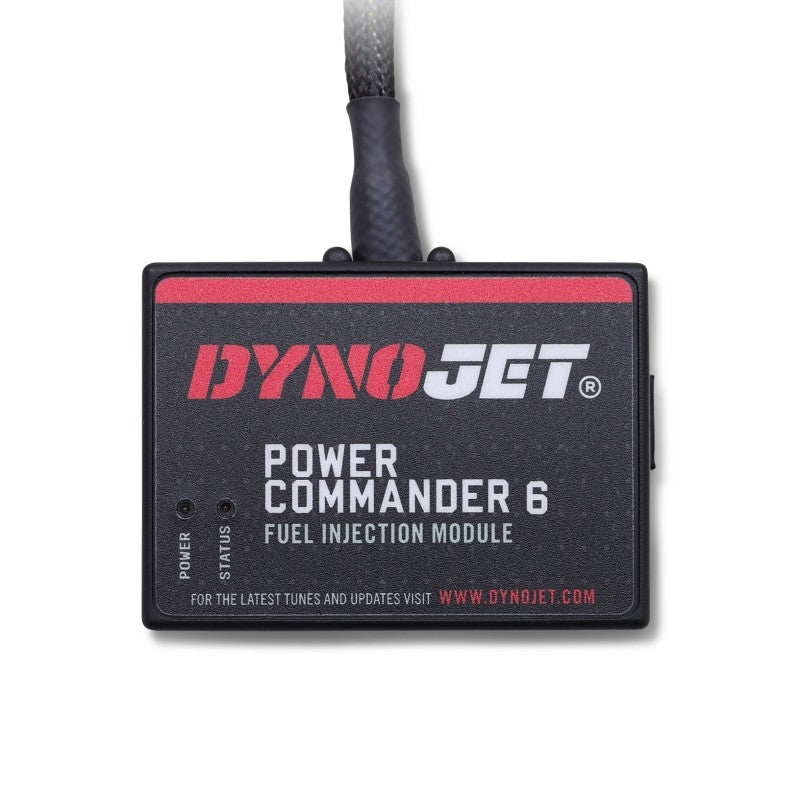
For example, the Dynojet 08-16 Yamaha YZF600 R6 Power Commander 6 ($482.99) is a plug-and-play fuel injection tuner that lets you adjust fuel and timing on that model, with a detachable module that makes workbench updates simpler. Before you order, verify your model year and confirm the listing matches your configuration, then check out when you're ready.
Frequently Asked Questions
What is the best website for buying aftermarket motorcycle parts?
The best website is one that lists exact fitment by make, model, and year, shows clear part specifications, states its return and warranty terms, and gives a real shipping timeline. NE Cycle Shop carries both OEM and aftermarket parts for motorcycles, dirt bikes, and ATV/UTVs, and it ships all orders placed by 3PM Eastern Time the same day, Monday through Friday. Before you buy anywhere, check that the product page confirms compatibility with your exact bike, then compare the listed specifications against the original part.
Is it better to get OEM or aftermarket parts?
Neither is better in every case. OEM parts are built to the original manufacturer's specifications and are the safest choice for critical systems when fitment or warranty matters most. Quality aftermarket parts can match or exceed OEM specifications and often cost less, which suits performance upgrades and older bikes where OEM supply is limited. Judge each part by its material, certification, and fitment evidence rather than by its label alone.
How can you tell if an aftermarket motorcycle part is high quality?
Look for specific material grades, such as the stainless steel grade used in spokes, documented tensile strength compared with OEM, and clear manufacturing tolerances. A high-quality part also includes complete fitment data, a defined warranty, and installation guidance. Vague claims with no specifications are a warning sign. Products that state they meet or exceed OEM standards should identify which standard and how it was verified.
How can you spot counterfeit motorcycle parts?
Counterfeits often have inconsistent finish, misspelled brand names, missing part numbers, or packaging that differs from the manufacturer's usual presentation. Compare the part's markings, weight, and dimensions with the OEM reference or the manufacturer's published specifications. Be cautious of listings priced far below comparable parts, sellers with no return policy, and product photos that appear copied from other sites.
What should you check to make sure a motorcycle part fits?
Start with make, model, and year, then confirm trim, engine size, and any regional or ABS variants, since these can change the part. Compare the listed part number and critical dimensions, such as chain pitch, tooth count, or spoke count and length, against your original part. If you are unsure, measure the old part before ordering and ask the seller to confirm fitment for your exact configuration.
What documentation should come with a motorcycle part?
A quality part should come with a part number, manufacturer name, specification sheet, and installation instructions where relevant. Some components, such as master links, may specify that installation should be performed by a certified mechanic or with a particular tool. Keep your order confirmation and any warranty documentation, since you will need them for returns or warranty claims.
