
7 Checks Before You Buy OEM Motorcycle Parts Online
Quick Summary
To buy oem motorcycle parts online safely, identify your exact bike first using year, make, model, trim and VIN, then find the component's OEM part number on an official diagram. Compare the listing's number character for character, check for supersession, and run a final fitment check before checkout.
- Write down your bike's year, make, model, trim and VIN before searching anything.
- Find the component on an official diagram and copy its OEM part number exactly, including suffixes.
- Check whether the part number has been superseded and confirm the newer number applies to your year.
- Treat a near-match with a different suffix as a different part, not an acceptable substitute.
- Trust your VIN and the manufacturer's diagram over a seller's free-text fitment claim.
Is this part right for your bike?NE Cycle Shop ships OEM and aftermarket powersports parts, with orders placed by 3PM Eastern shipped the same day.
Check Your Fitment
Table of Contents
- Why Buying OEM Motorcycle Parts Online Goes Wrong
- Motorcycle Parts Compatibility: Identify Your Exact Bike First
- Motorcycle OEM Part Number Lookup, Step by Step
- OEM vs Aftermarket Motorcycle Parts: When Each Makes Sense
- How to Verify Motorcycle Parts Fitment Before Checkout
- Placing Your First Order: Next Steps on Your Bike
- Frequently Asked Questions
Why Buying OEM Motorcycle Parts Online Goes Wrong
Buying the right part online is easy until the wrong one shows up at your door. Most mistakes come from one simple issue: the buyer assumed a part fits without checking.
The same patterns come up repeatedly. Riders match on the bike's name alone, skip the model year, or ignore wheel position. Others use a part number from an old forum post that has since been superseded.
This guide walks through seven checks to run before you buy OEM motorcycle parts online. Work through them in order to catch fitment problems before checkout. For a dedicated walkthrough, see how to check part compatibility before you buy.
Motorcycle Parts Compatibility: Identify Your Exact Bike First
Compatibility starts with the exact bike, not the model name. A "Road King" or "GSX-R600" can cover many years, and the parts often change between them.
Your VIN is the most precise identifier you have. A VIN decoder or your dealer can confirm build details. Use it whenever a listing offers a fitment lookup.
Keep these details handy:
- Year, make, and model
- Trim or variant (standard, ABS, touring, and so on)
- Engine size if the model came in more than one displacement
Watch out: Assuming two model years share a part is one of the most common errors. Check the listing against your exact year before you add it to your cart.
Model Year, Trim, and Wheel Position Differences
Manufacturers often change a part partway through a model run. A bearing, sprocket, or windshield can look identical and still differ by a few millimeters. Compare the listing's stated year range with your bike's build year.
Wheel position matters too. Front and rear wheels use different bearings, spokes, and hubs. Confirm which side or position the part is made for before you buy.
Motorcycle OEM Part Number Lookup, Step by Step
An OEM part number is the manufacturer's own code for a specific component. Searching by part number beats searching by description, because two parts with the same name can fit different bikes, and the same part can carry different numbers across model years.
Follow these steps:
- Find the exact diagram or exploded view for your bike in a parts catalog, using your year, make, model, and trim.
- Locate the component on the diagram and write down its OEM part number exactly as printed, including any letter suffixes.
- Search the number in the seller's catalog or search bar.
- Compare the listing's stated part number with the number you wrote down, character for character.
- If the numbers do not match, stop and check why before you order.
A part number is a precise identifier, but not a fitment guarantee on its own. It confirms which component the manufacturer built to a given specification, not that the seller's listing is accurate, that the part is in stock in the configuration you need, or that your bike is unmodified.
What VINs, OEM Numbers, and Superseded Numbers Can and Cannot Confirm
Each identifier answers a different question, and mixing them up is where orders go wrong.
- VIN: Confirms the bike as built, including model year, plant, and original configuration. It cannot confirm later modifications, replaced bodywork, or a swapped engine. Use it to anchor the search, not to close it.
- OEM part number: Confirms the manufacturer's specification for a component. It cannot confirm that a seller's listing is current or that the part will fit a modified bike.
- Superseded part number: Confirms that the manufacturer replaced an older number with a newer one, usually for an updated design, supplier change, or material update. It cannot confirm that the newer part is backward-compatible with every earlier year without checking the manufacturer's supersession note.
Part numbers get superseded more often than riders expect. A brake pad, bearing, or gasket may carry a new number while remaining functionally identical, or the new number may reflect a real design change.
Watch out: A number that matches on the first six characters but differs in the suffix is a different part. Suffixes often encode finish, side, or revision, and a near-match is still a mismatch.
How to Find Your OEM Part Checklist
Use this checklist before you search for any OEM part:
- I have the year, make, model, and trim written down.
- I have my VIN if the seller offers a VIN lookup.
- I found the component on an official diagram for my exact bike.
The article's key identifiers and their limits are summarised below.
| Identifier | What it confirms | What it cannot confirm |
|---|---|---|
| VIN | Bike as built, including model year and original configuration | Later modifications, replaced bodywork, swapped engine |
| OEM part number | Manufacturer's specification for a component | Listing is current, part is in stock, bike is unmodified |
| Superseded part number | Manufacturer replaced an older number with a newer one | Newer part is backward-compatible with every earlier year |
OEM vs Aftermarket Motorcycle Parts: When Each Makes Sense
OEM parts are made to the original manufacturer's specifications. They are the safest choice when the part is safety-critical or when the fit needs to match the factory exactly.
Aftermarket parts come from other manufacturers. They can offer lower prices, better performance, or designs the factory never made.
A simple rule works for most riders. Choose OEM for safety-critical components and anything where a precise fit matters most.
NE Cycle Shop carries both OEM and aftermarket parts.
How to Verify Motorcycle Parts Fitment Before Checkout
Before you click checkout, run a final fitment check. This step catches mistakes that slip past the earlier ones, and a repeatable process beats a quick glance at the photo.
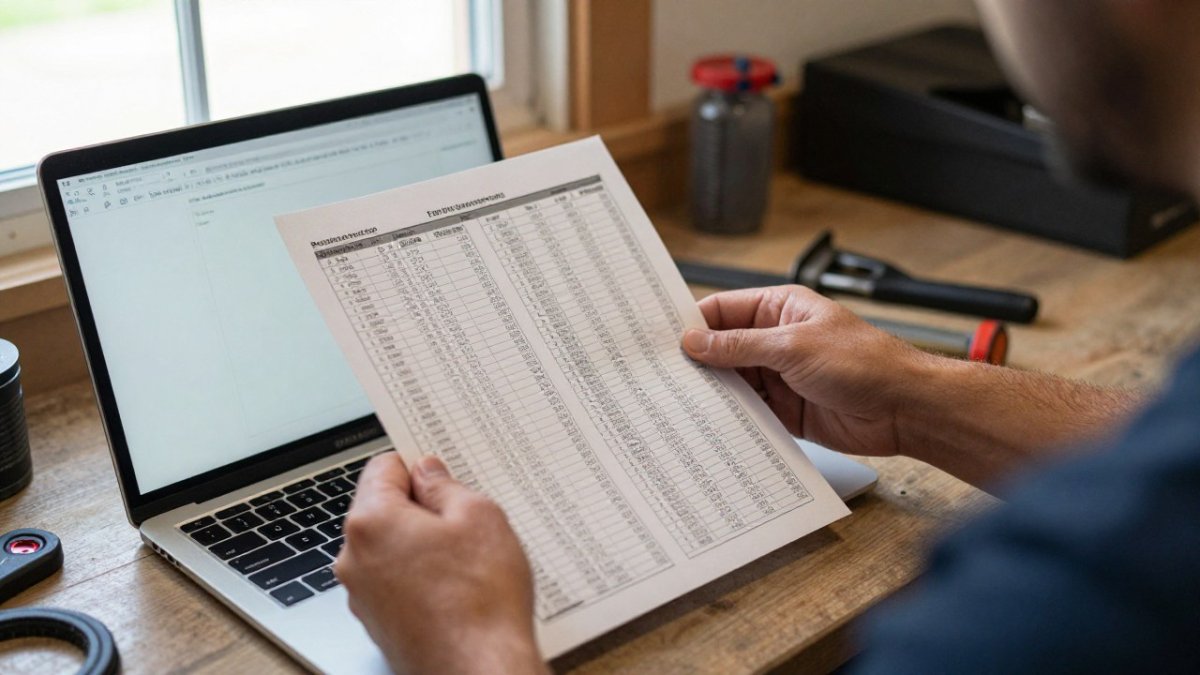
Start with the listing's stated fitment. Read the model years and models it names, then compare the part's dimensions, mounting points, and connectors with your original part if you can measure or photograph it.
Check these items:
- The listed model years include your bike's year
- The mounting holes and bolt pattern match your original part
- Electrical connectors have the same number of pins and shape
Component-Specific Fitment Checks
Fitment risk is not the same for every part. Run the check that matches the component you are buying.
- Brakes: Confirm rotor diameter and thickness, caliper mount spacing, pad shape, and whether the bike has ABS. A pad that fits the caliper can still be wrong for the rotor.
- Suspension: Confirm fork tube diameter, stanchion length, spring rate, and mount width. Seals and bushings are often year-specific even when the fork model name is unchanged.
- Electrical: Confirm connector pin count and shape, voltage, wattage, and whether the part expects a CAN-bus or older wiring setup. A connector that plugs in can still send the wrong signal.
When Fitment Information Conflicts
Catalogs, sellers, and your own measurements will sometimes disagree. Work through the conflict in order rather than guessing.
- Trust your VIN and the manufacturer's diagram over a seller's free-text claim.
- If the catalog and listing disagree, ask the seller to confirm the part number against your VIN in writing.
- If the seller cannot confirm, compare physical dimensions and mounting points against the part you removed.
- If the conflict remains, do not order. A wrong part costs more time than one you wait to confirm.
Assessing Used, Aftermarket, and Modified Parts
A used or modified original part may differ from factory specs, and a catalog fitment tool may not resolve it.
For used parts, ask for photos of the mounting surfaces, the part number stamp, and any wear on critical surfaces.
When the listing and your bike disagree, do not order on assumption. Contact the seller with your VIN and the part number and ask them to confirm.
Placing Your First Order: Next Steps on Your Bike
Once the part passes every check, place the order.
Orders placed by 3PM Eastern Time ship the same day, Monday through Friday, so plan accordingly if you need the part quickly.
If something does not fit, do not force it.
Ready to shop? Browse OEM and aftermarket parts at NE Cycle Shop and run through these seven checks on your next order.
Frequently Asked Questions
How can I check whether a motorcycle part fits my bike?
Start with your bike's year, make, model, and trim, then search a motorcycle-specific parts catalog using those details. Check the listing's stated fitment against your model year, and confirm the part number against the original part or the manufacturer's catalog. If the listing lists several years, match your bike's production date, since manufacturers often change components mid-run. Compare dimensions, mounting points, and connectors with the original part before installing. If the listing and the catalog disagree, contact the seller before ordering rather than assuming the part will fit.
Where can I find the OEM part number for my motorcycle?
The OEM part number is usually printed on the original component itself, often stamped or labeled on the housing. If the part is already removed, check the owner's manual, the service manual for your model, or the manufacturer's parts catalog. Your VIN can help identify the exact build, since it encodes model and production details. Once you have the number, search it directly in a parts catalog. Superseded numbers are common, so if the original number no longer appears, look for the listed replacement number that the manufacturer has assigned.
Are OEM motorcycle parts better than aftermarket parts?
OEM parts are built to the original manufacturer's specifications, which makes them the safest choice for fitment and for safety-critical components such as brakes and steering. Aftermarket parts can offer lower prices, performance upgrades, or availability for older models where OEM stock has run out. The right choice depends on the component. For a wheel bearing or a windshield where exact fit matters, OEM or a verified OE-style part is usually the safer option. For upgrades, a reputable aftermarket brand may be the better fit. Always verify the part number and stated fitment regardless of which type you choose.
Can I use a part from a different year or model motorcycle?
Sometimes, but only when the parts catalog confirms the same part number is used across those years or models. Manufacturers often change bearings, seals, and other components during a production run, so a part that looks identical may differ in dimensions or mounting points. Check the listed fitment years carefully, compare physical measurements against your original part, and confirm the replacement number is not superseded. When fitment information conflicts, do not guess. Contact NE Cycle Shop before ordering so the correct part can be confirmed for your specific bike.
